Jeremy Bolen
-
Earth Time
Jeremy Bolen and Brian Holmes
Künstlerhaus Stuttgart
January 25–March 22, 2025
What does the Anthropocene look like up close? How does global ecological change refract into lived experience?
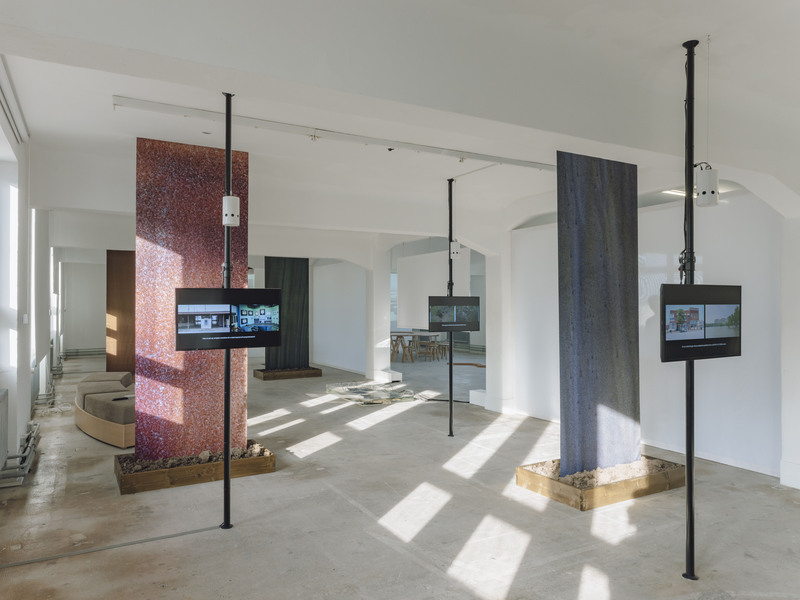
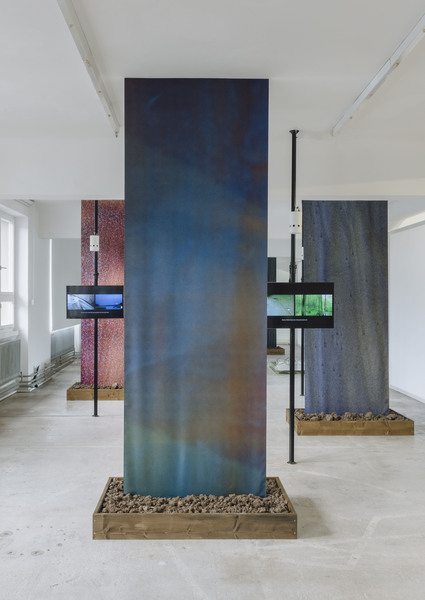
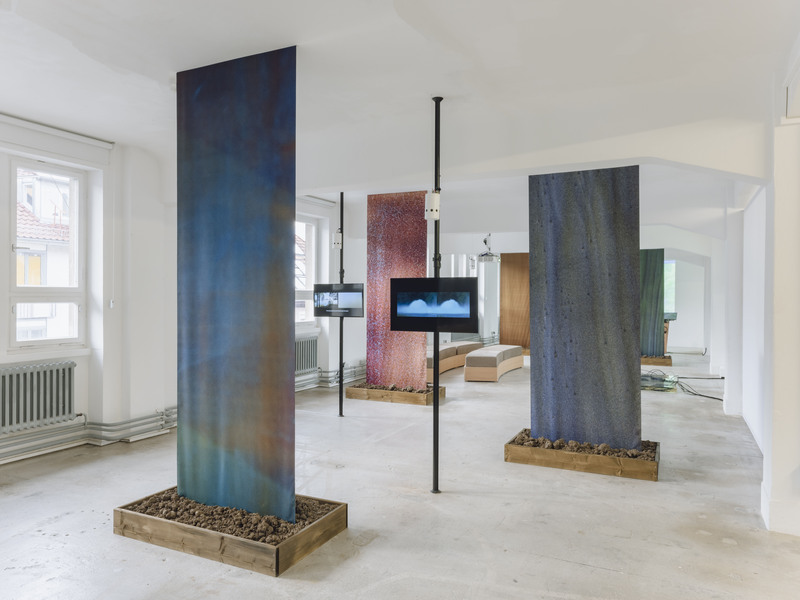
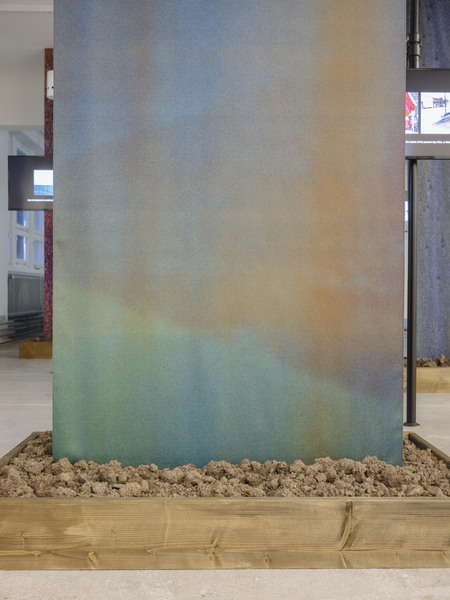
For this culminating phase of the Rivermap atmosphere at Kunstlerhaus Stuttgart, Jeremy Bolen and Brian Holmes begin with an invisible marker: lingering radiation at a place called Site A in Red Gate Woods on the outskirts of Chicago, Illinois, where Manhattan Project scientists covertly ran the world’s first atomic pile during the Second World War. Here and at other nuclear dumps in the area, Bolen buried color film in the ground, then retrieved and developed it, revealing material traces of a turning point in Earth’s history.
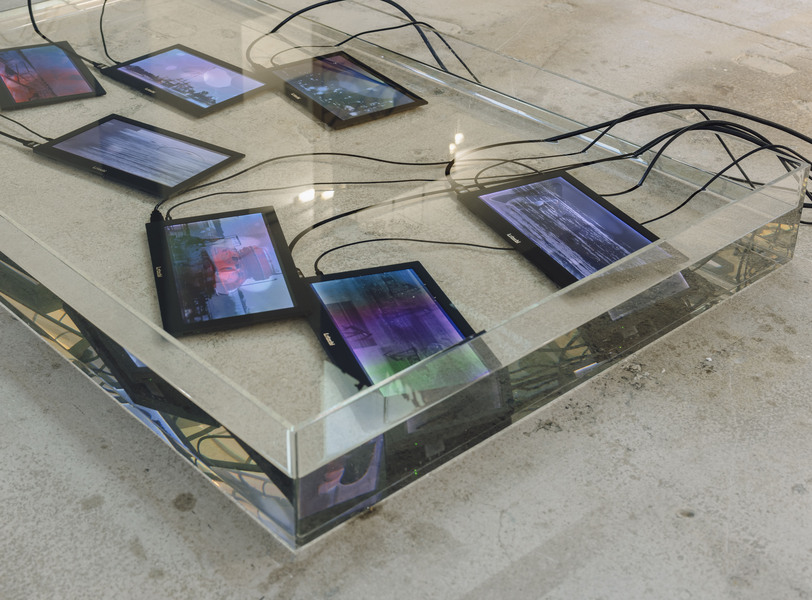
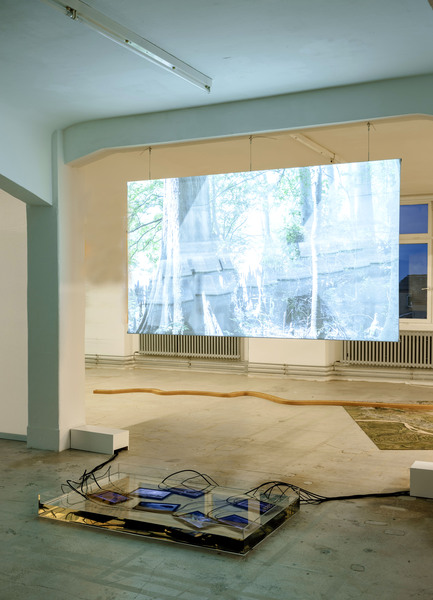
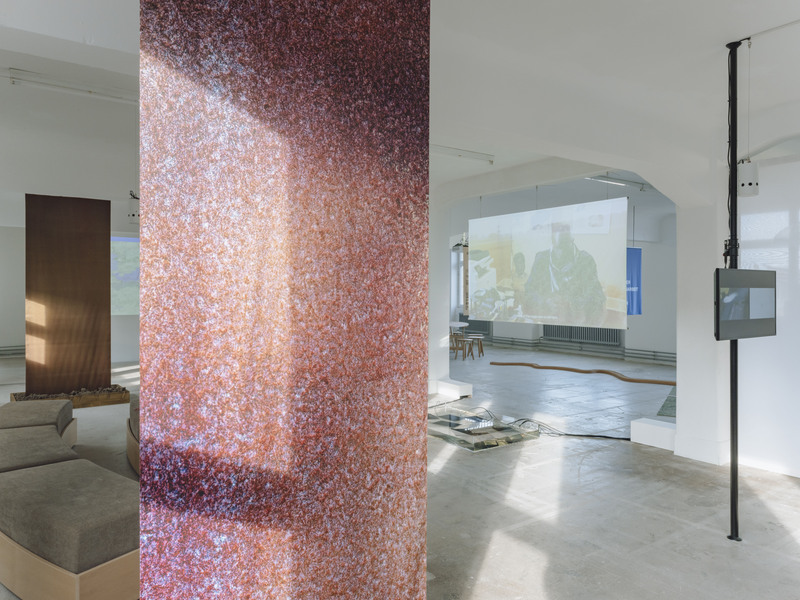
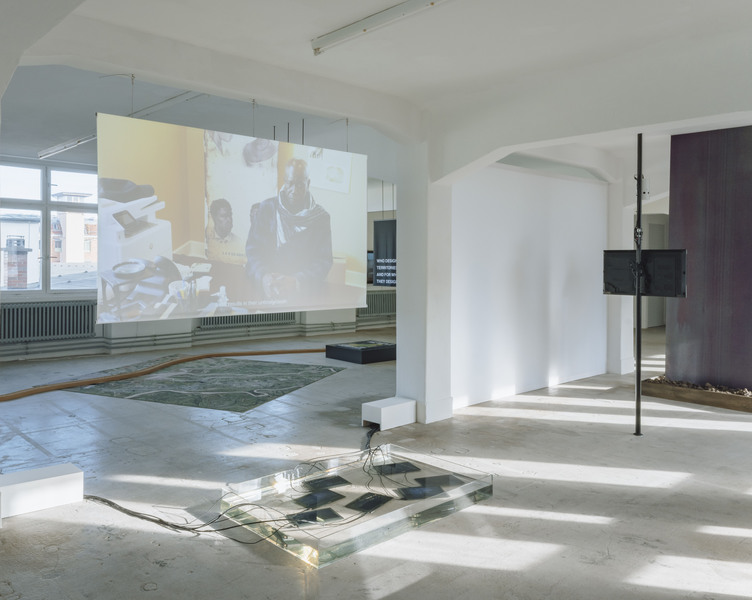
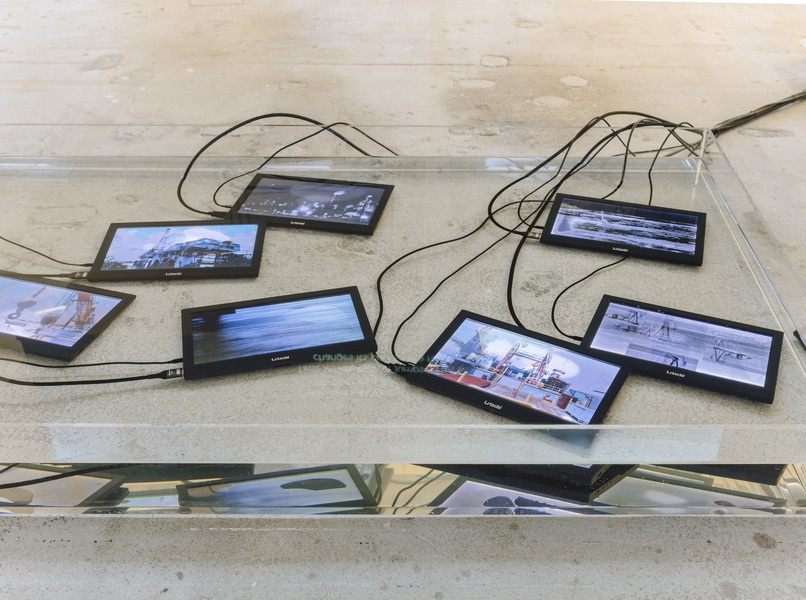
In the exhibition space these strips of exposed film have become a series of psychedelic banners rising from fresh soil, forming an uncanny labyrinth in which two extensive projects are inserted. The first is entitled Born Secret (Cash for Kryptonite), shown on a series of monitors interspersed among the irradiated banners. This video essay, made in 2019, reaches out from Illinois to a pair of atomic weapons production sites in nearby states: the Paducah Gaseous Diffusion Plant in Kentucky and the Oak Ridge Laboratory in Tennessee. By examining the ecological foundations of these industrial projects, the artists weave the nuclear narrative into a vast process of territorial change based on river engineering, hydropower and the modernist promise of abundant electricity. Uncovering the sociopolitical components of the Faustian bargain that trades scientific knowledge for world-shaping power, the video gives tangible form to what Holmes calls “the Anthropocene mode of production.”
The question that runs throughout these works is fundamental: What kind of world is industrialized humanity creating? Bolen and Holmes made Born Secret as part of the continental-scale project Mississippi: An Anthropocene River, organized in 2019 by HKW and the Max Planck Institute for the History of Science. Subsequently they returned to the Lower Mississippi, to explore an historical genealogy in which the mastery of nature by European settlers becomes irrevocably entwined with the domination of other human beings. The video If This River Could Move (2022) begins at a key site of river engineering called Old River Control, located just across the Mississippi from the former Angola plantation, which later became a convict-leasing camp and is now the Louisiana State Penitentiary. The camera then moves downstream, through the petrochemical corridor of Cancer Alley and the flood-besieged city of New Orleans, to end in the storm-tossed environments of the Bird’s Foot Delta, where the great river finally pours into the sea.
-
-
-
-
-
-
-
-
-